Automotive & Components
Component handlingAssemblyProcess automationInspectionEnd-of-line
Automation for high-volume and mixed-model production where repeatability, cycle time and process control matter.
We adapt the automation approach to the product, production environment, quality requirement and operating model of each sector.
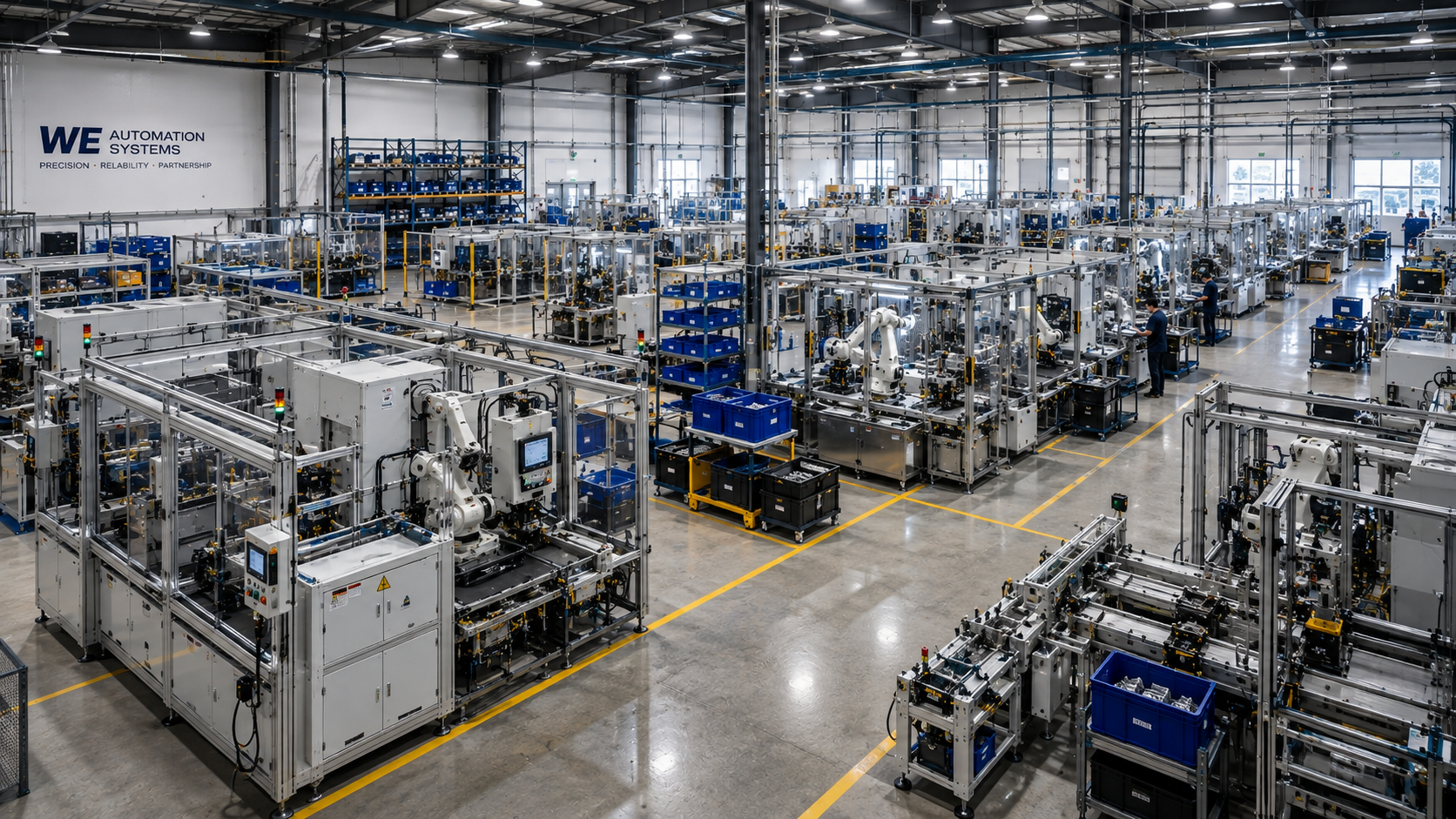
Automation for high-volume and mixed-model production where repeatability, cycle time and process control matter.
Precision automation for products that demand controlled handling, accurate placement, verification and reliable process execution.
Production equipment for controlled manufacturing environments requiring dependable handling, repeatable processes and disciplined verification.
Automation for diagnostic and laboratory products where presentation, process consistency and product verification are important.
Application-specific machinery for components and assemblies with demanding positioning, metrology or process requirements.
Custom production systems for industrial components, subassemblies and manufacturing operations that do not fit standard machinery.
Scalable automation for products requiring efficient assembly, product handling, inspection, packing and end-of-line operations.
Automation for product flow, packing, labelling, case handling, palletising and downstream production logistics.
Many automation projects begin because the existing production method can no longer deliver the required output, consistency or control.
Increase output without losing process control.
Reduce variation in critical production steps.
Verify product and process performance closer to the source.
Reduce repetitive or difficult manual production tasks.
Support product variation and mixed manufacturing demand.
Capture the information needed for production accountability.
If a manufacturing process benefits from custom machinery, robotics, inspection, testing, handling or production integration, the application can be reviewed on its own engineering merits.